Crete’s most beautiful beaches explained properly. Elafonissi, Balos, Falassarna and Matala, plus where to find one of Crete’s only true sandy beaches you can stay all day.
Crete does not give up its best beaches. They are scattered across the island, shaped by different coasts, different winds, and different expectations.
Some beaches are places you arrive, phoeasily tograph, and leave. Others are places you can actually stay.
For travellers researching the most beautiful beaches in Crete, understanding this difference changes everything.
This guide looks at four of the island’s most searched beaches, Elafonissi, Balos, Falassarna and Matala and how to experience each one properly, without forcing the day.

Pink sand. Shallow water. Light that feels almost unreal.
Located on the southwest coast, Elafonissi Beach, Crete works best early. Arrive before the heat settles in. Walk the sandbars. Swim while the water is still calm.
Facilities are limited. Shade is minimal. Crowds arrive quickly. Elafonissi is not designed for a long beach day. It is designed to be seen.
Experience it clearly. Then move on.

The view from above. The lagoon opening out below. The sense of scale before you reach the water.
Getting to Balos requires effort, either by boat or by road followed by a steep walk. The beach itself is wide and exposed, with limited shade and changing conditions.
Balos is not a place to plan around comfort or time. It is a place to arrive, take in fully, swim once or twice, and leave without forcing the afternoon to bend around it.
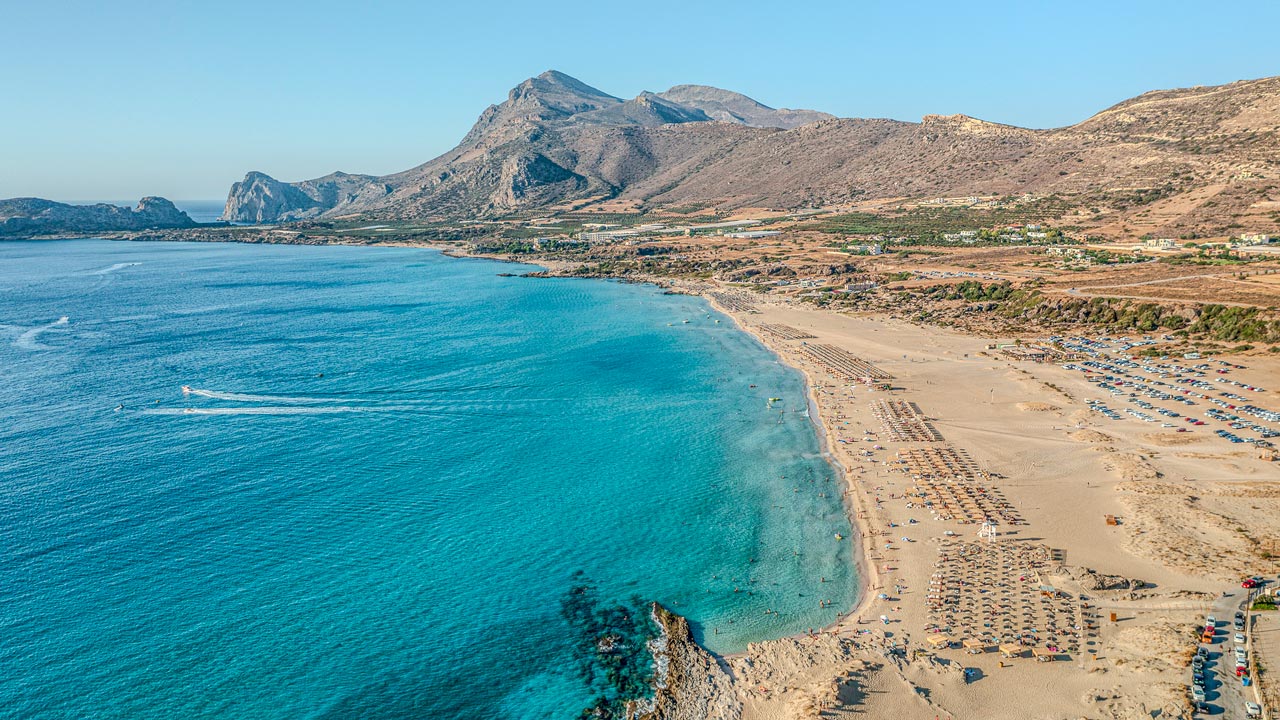
The beach is wide and largely undeveloped, with long sandy sections and fewer natural breaks.
Conditions here change more than on the north coast. The sea can be stronger, and wind is common, particularly later in the day. On calm days, Falassarna feels expansive and clear. When the wind picks up, swimming becomes more challenging and the experience shifts quickly.
Falassarna is best visited on settled weather days or earlier in the afternoon. If conditions turn, it usually makes sense to move on rather than wait them out.

Swimming here is usually easy, even when other parts of the island are affected by wind.
The beach is compact, with facilities close by and the village directly behind it. This makes Matala a convenient stop rather than a destination that requires planning. You can arrive, swim, dry off, and sit down for lunch without moving far.
Matala works best as a slower interlude rather than a full beach day. Arrive late morning or early afternoon, swim, eat nearby, and leave once the beach fills.
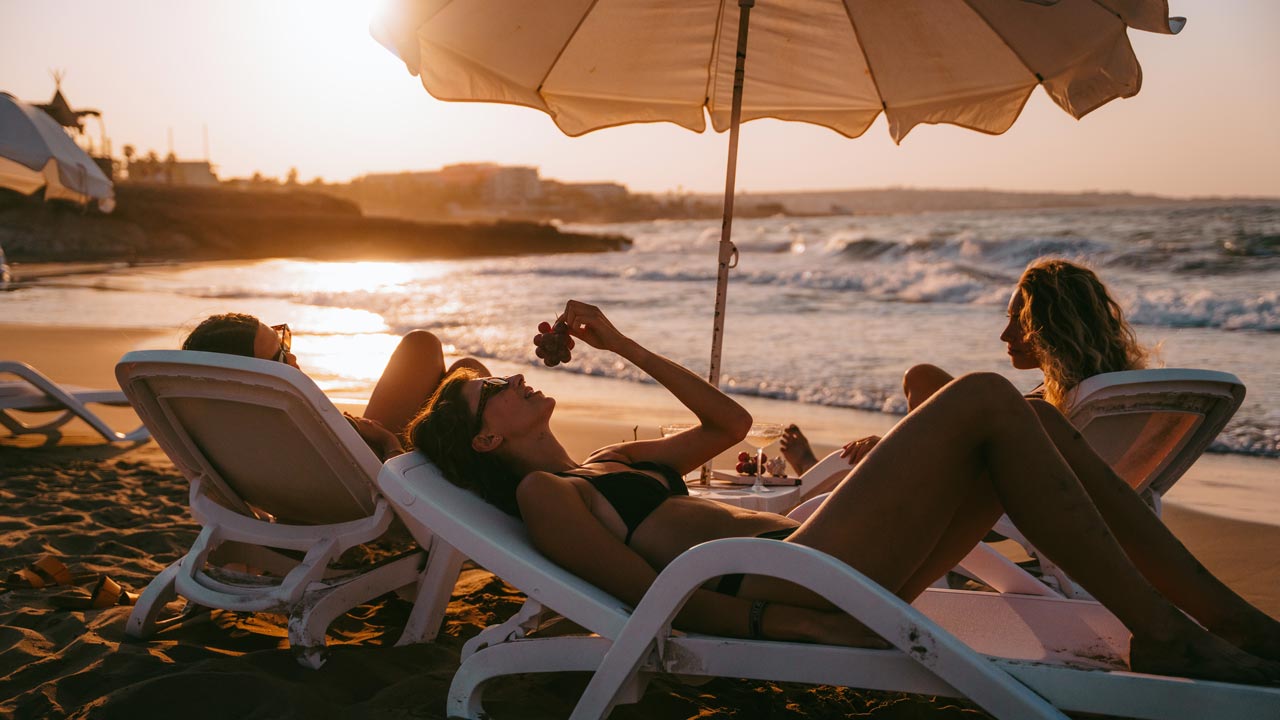
Some beaches along the northern coast handle this transition particularly well and are often cited when people search for things to do in Crete.
Afternoon becomes evening without friction. DJs start quietly. Lighting shifts subtly. You look up and realise time has moved faster than expected.
Sunset here is not a performance. It is a transition point.
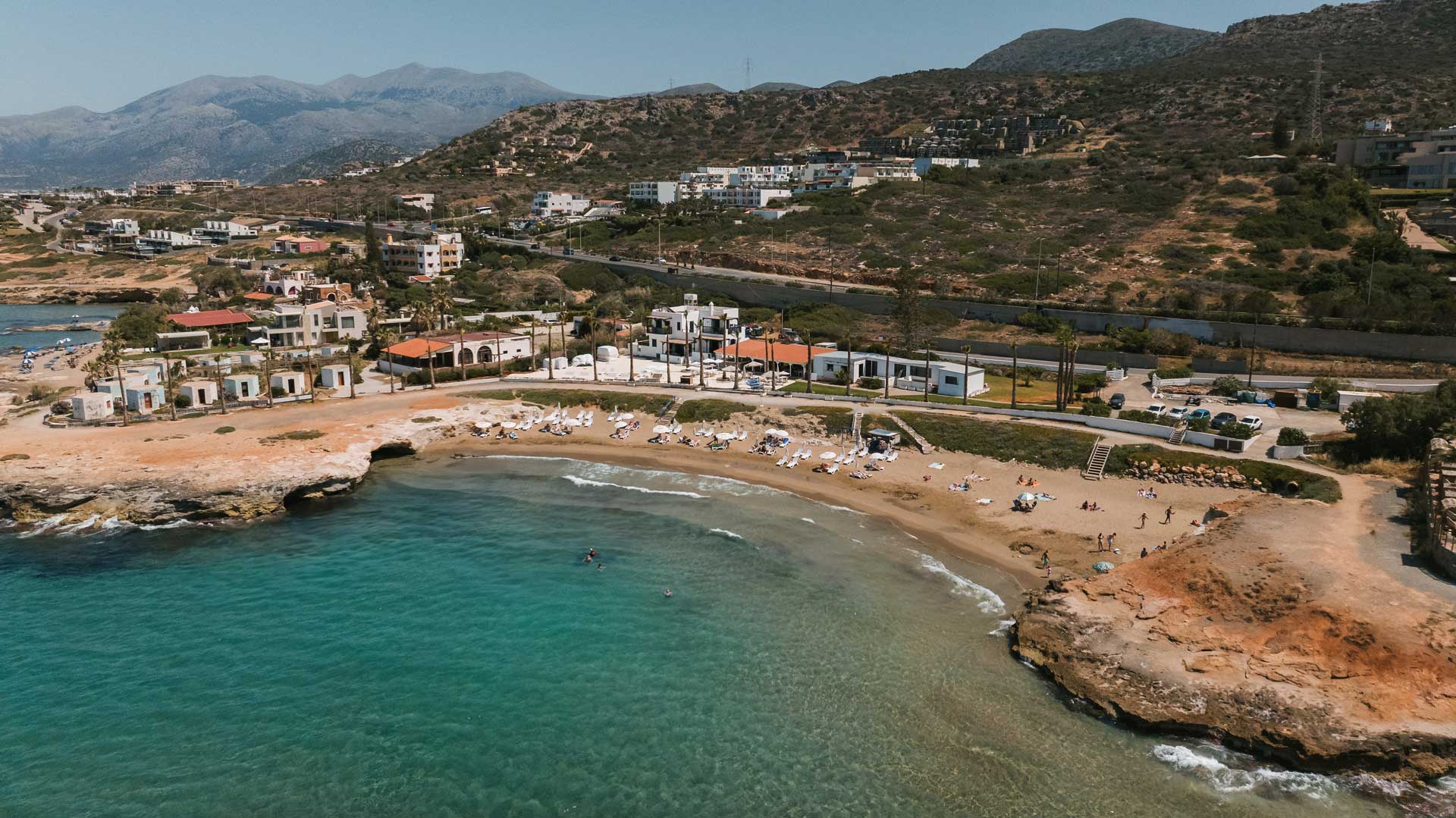
For an island known for beaches, Crete has surprisingly few genuinely sandy ones. Many of its most photographed beaches are beautiful but impractical for staying all day with pebbled shorelines, exposed coves, and places designed for passing through.
Long, natural sandy beaches that support a full day for swimming, food, shade, and a second swim are rare. On the northern coast, they still exist quietly.
At DIO Beach Club, the beach itself allows time to stretch. A natural sandy shoreline rather than a narrow constructed strip. Space to arrive without urgency. The ability to swim, eat, rest, and return to the water without resetting the day.
This is where the idea of a complete beach day in Crete still works.
Elafonissi for colour.
Balos for scale.
Falassarna for openness.
Matala for ease.
And then there are beaches where you stop checking the time, where the day moves naturally from sea to table to sunset.
Often, the beach that defines a trip is not the one you photograph most. It is the one you do not feel the need to leave.
DIO sits on one of the only pure sand beaches in Hersonissos. Most of the coastline in the area is rocky or pebbly, so the soft sand at DIO is genuinely rare and one of the things that sets it apart. The water is crystal clear and the beach is kept in excellent condition throughout the season.
DIO is a boutique beach club nestled on the shores of Hersonissos, where the Aegean meets world-class music. The beach sits at the centre of the DIO experience: sunbeds, handcrafted cocktails, food delivered to your spot, and carefully curated sounds from the DJ programme as the afternoon unfolds. It is a place where luxury, nature, and music converge into something designed to be savoured slowly.
Yes. The DIO beach is open to day visitors as well as suite guests and event attendees. You can book a sunbed and enjoy the beach, kiosk, and bar without attending an event or staying in the suites. The beach is part of the core DIO experience.
Yes. Sunbeds are available to book in advance through the DIO website. A deposit of €5 per sunbed is required at the time of booking to secure your reservation, with the remaining €5 balance payable on arrival. Each sunbed costs €10 in total.
Walk-ins are welcome subject to availability, but booking ahead is recommended during busy periods in July and August.
Each sunbed costs €10 in total. A €5 deposit per sunbed is paid online at the time of booking, with the remaining €5 settled on arrival at the venue.
Food and drinks are served directly to your sunbed by the DIO kiosk team. There is no need to leave your spot. Simply order from the beach menu and the team will bring everything to you.
The DIO kiosk serves a full menu covering breakfast, snacks, salads, beverages, sweets, and healthy options. Breakfast includes a Greek yogurt bowl, avocado toast, omelette, and bacon egg brioche. Snacks range from calamari, chicken souvlaki, pita pork gyros, and shrimp tacos to a DIO beef burger, veggie burger, spanakopita, club sandwich, and mozzarella sticks. Salads include a Dakos bowl, Greek salad, and green salad. The drinks menu covers cocktails including mojito, Aperol spritz, and pina colada, alongside wine, beer, soft drinks, coffees, and teas. For something sweet, there are Greek donuts, ice cream, lemon gelato, and smoothie cones. A healthy options section covers protein bars, smoothies, veggie mix with rice, and chicken and rice.
The full menu is available at dio.life/beach-menu.
SUNSETS is DIO's daily DJ programme, running every afternoon from 5pm till 11pm. It's a free-to-attend experience for guests at the venue, set against the backdrop of the Mediterranean as the sun meets the sea. Expect a mix of Afrohouse, Organic House, and melodic sounds, with special guest DJs joining the programme throughout the season.
No. SUNSETS is a free-to-attend event for all guests at DIO. You do not need to purchase a ticket in advance. Simply arrive at the venue from 5pm and enjoy the programme. Sunbed reservations are available separately if you'd like to secure your spot on the beach.
SUNSETS runs from 5pm till 11pm. HEDONISM and DIONYSIA both run from 5pm till 11:30pm. All times are local Crete time (EEST, UTC+3). Gates open at 5pm and the music programme begins shortly after.
DIO's music programme is rooted in the deeper, more soulful side of electronic music. Across the three event series, you'll hear Afro House, Organic House, Melodic House, Melodic Techno, and peak-hour House. The sound is warm, sun-drenched, and intentional; built for a beachfront setting and an audience that listens as much as it dances.
SUNSETS leans into more atmospheric, melodic sounds as the sun goes down. HEDONISM moves through Afro, Organic, and peak-hour House as the night builds. DIONYSIA brings headline artists who each bring their own distinct sound to the programme, so the flavour of each event varies accordingly.
The closest airport to DIO is Heraklion International Airport "Nikos Kazantzakis" (HER), approximately 22 km west of Hersonissos. It's a straightforward drive along the E75 national road and takes around 25 minutes without heavy traffic. This is the airport to use for the vast majority of visitors arriving in summer, as it receives direct flights from across Europe.
Chania International Airport (CHQ) is the island's other main airport, roughly 130 km to the west. It's a viable option if flights are significantly cheaper or more convenient from your departure city, but factor in the additional 90-minute drive along the north coast road.
There are three main options from Heraklion Airport to Hersonissos:
Taxi -- The fastest and most convenient option. Taxis wait outside the arrivals hall and the fare to Hersonissos is approximately €30 to €40 for the cab (not per person). The journey takes around 25 minutes in normal traffic. Agree the fare with the driver before setting off; a fare board in the arrivals hall lists agreed rates to key destinations.
Pre-booked transfer -- Several local companies offer private airport transfers. Worth booking in advance if you're arriving late or travelling with a group and luggage.
Bus -- A cheaper option, though it involves getting to the central Heraklion bus station first (a short taxi ride or 2 km walk from the airport), then boarding a KTEL regional bus east towards Hersonissos. The journey takes 30 to 45 minutes and tickets cost a few euros. Buses run every 30 to 60 minutes during the day.
DIO does offer some limited parking on site. Hersonissos has on-street parking available in the area around the venue. Availability can be limited during busy summer evenings, particularly on event nights, so we recommend arriving with extra time if you're driving. A number of public and private car parks are also dotted around the town centre.
For HEDONISM and DIONYSIA nights we'd strongly encourage guests to consider arriving by taxi or transfer rather than driving, both for convenience and so everyone can enjoy the evening without restriction.