Planning a trip to Heraklion, Crete? This guide covers beaches, Knossos, day trips, food, getting around, and how to structure your time properly.

Most people fly into Heraklion and immediately wonder how quickly they can leave.
That is the wrong instinct.
Heraklion is the starting point, the base, and for many visitors, the best place to stay for the entire trip. It puts you within reach of one of Europe's most significant archaeological sites, a genuinely beautiful old town, rare sandy beaches, and day trips in both directions along the coast.
This guide covers everything you need: where to stay, what to do, where to swim, how to get around, what to eat, and how to structure your time without spending half of it in a car.
Banner Image: Coast Line of Aghios Nikolaos taken from the East side. Photo by Evangelos Mpikakis on Unsplash.
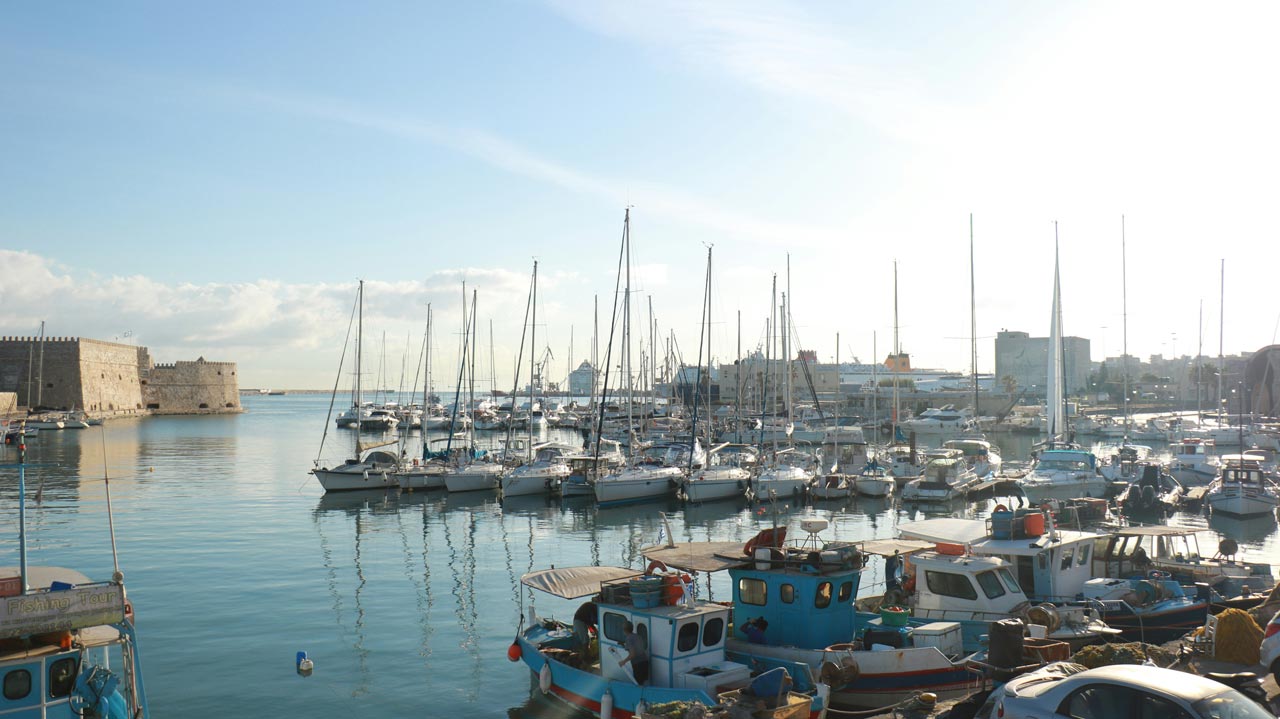
Above: The marina inside the Venetian harbour of Heraklion. Photo by Qingqing Cai on Unsplash
Heraklion is not a city you pass through. It is a city you use.
Staying within 20 to 30 minutes of Heraklion gives you access to Knossos and the Archaeological Museum, the old town and Venetian harbour, north coast beaches with genuine sand, and straightforward airport transfers.
The north coast east of the city works particularly well. You get beach access without losing proximity to the city, and the main highway keeps distances manageable.
For travellers who want to wake up already at the water, DIO Beach Club offers beachfront accommodation directly above the shoreline. Morning swim, coffee, lunch, sunset: all of it happens without relocation. For couples, small groups, or short-stay visitors, removing the gap between hotel and beach changes the pace of the whole trip.
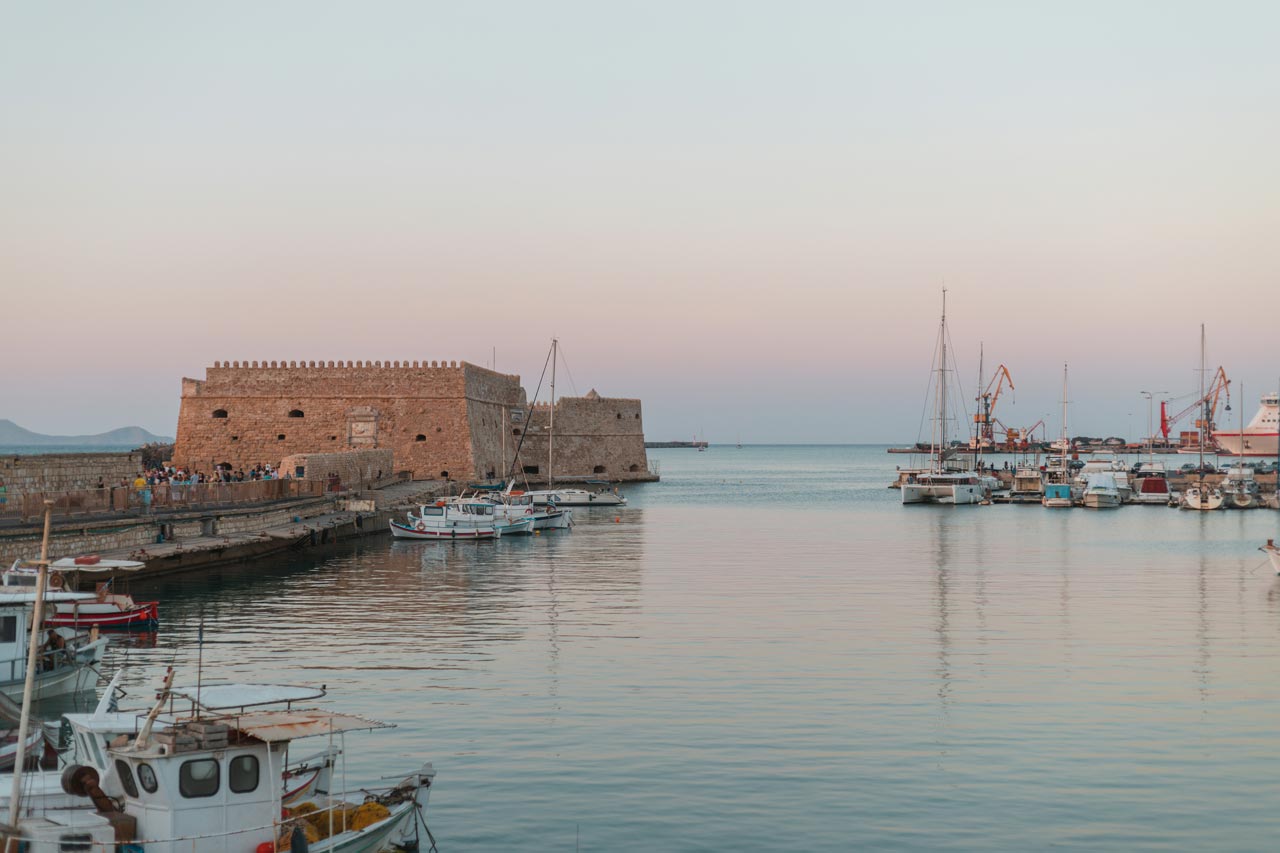
Above: The Koules Fortress guards the entrance to the Venetian Harbour at Heraklion. Photo by Clovis Wood on Unsplash
The Koules Fortress sits at the entrance to Heraklion's Venetian harbour and is one of the most immediately striking things about the city. Built by the Venetians in the 16th century, it held the harbour against Ottoman expansion for decades before eventually falling in 1669 after one of the longest sieges in history.
Entry is cheap. The views from the upper ramparts across the harbour and out to sea are worth the visit alone. Go in the late afternoon when the light is good and the heat has dropped.
Heraklion's old town rewards walking without a plan.
The Morosini Fountain at Lions Square is a natural gathering point, surrounded by cafes and stone streets that lead in several directions. The Venetian loggia, the old market lanes, the city walls: all of it is walkable and best experienced in the early evening when the temperature softens and the city moves at its own pace.
Visit 1866 Street, the covered market running through the centre of town. Olive oil, thyme honey, Cretan cheese, leather goods, handmade knives, ceramics: this is where to find genuine local produce and crafts rather than airport souvenirs.
Knossos is one of the oldest and most significant archaeological sites in Europe.
It was the centre of Minoan civilisation, a Bronze Age culture that flourished on Crete from roughly 2700 to 1450 BC, predating classical Greece by over a thousand years. The palace complex at its peak housed tens of thousands of people, contained Europe's first paved roads, and gave rise to the myth of the Minotaur and the labyrinth.
Walking through it is genuinely affecting if you let it be. The scale, the frescoes, the drainage systems, the throne room: all of it points to a civilisation of remarkable sophistication.
Go early in the morning, before the tour groups arrive and before the sun turns the site into a heat trap. Move slowly. Allow two to three hours.
Pair it with the Heraklion Archaeological Museum, a short drive or taxi into the city centre. The museum houses the Minoan collection, including the Phaistos Disc, one of the most studied undeciphered objects in archaeology. Together, Knossos and the museum make a full and genuinely memorable cultural day.
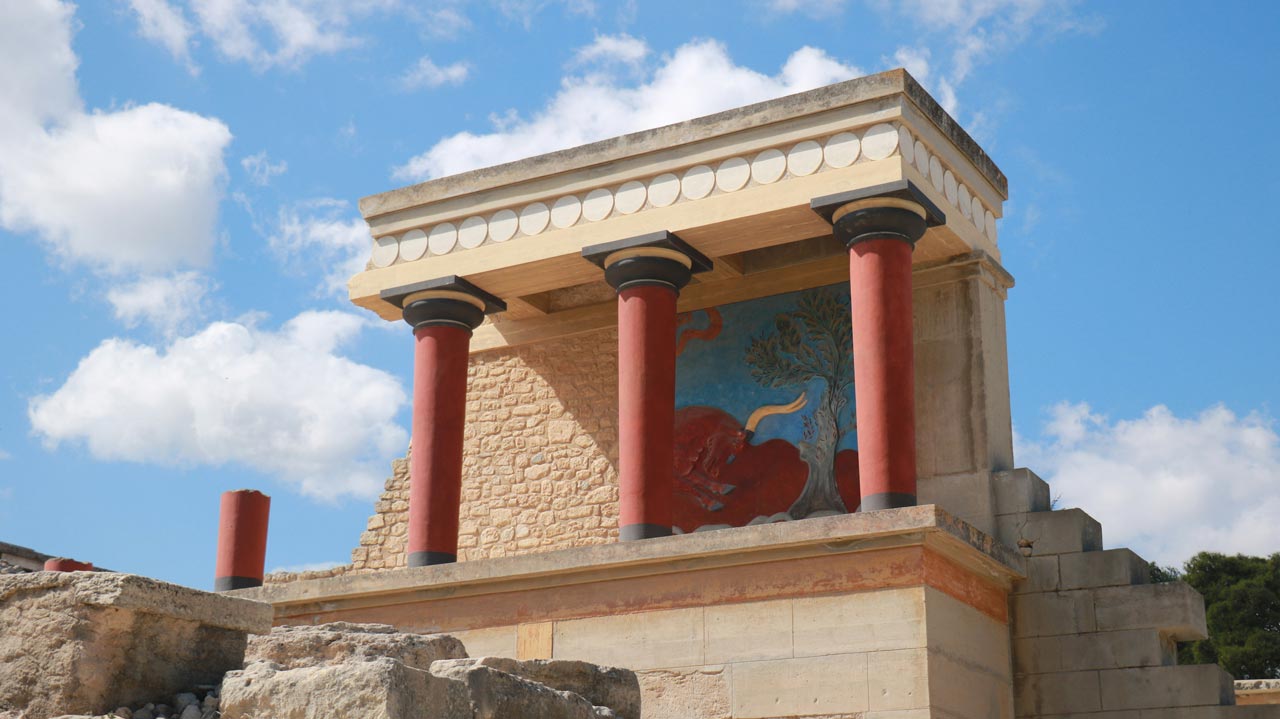
Above: The famous Bull-Leaping Fresco at Knossos. Photo by Qingqing Cai on Unsplash
Crete has fewer genuinely sandy beaches than most visitors expect. Pebbles and exposed shorelines are common.
The north coast near Heraklion is one of the exceptions. Wide stretches of natural sand, warm water, and easy access from the city make this the practical answer when people search for beaches near Heraklion.
At DIO Beach Club, the beach is pure sand, and the day is designed around it. Arrive, swim, have lunch, return to the water, stay for sunset. No relocation required.
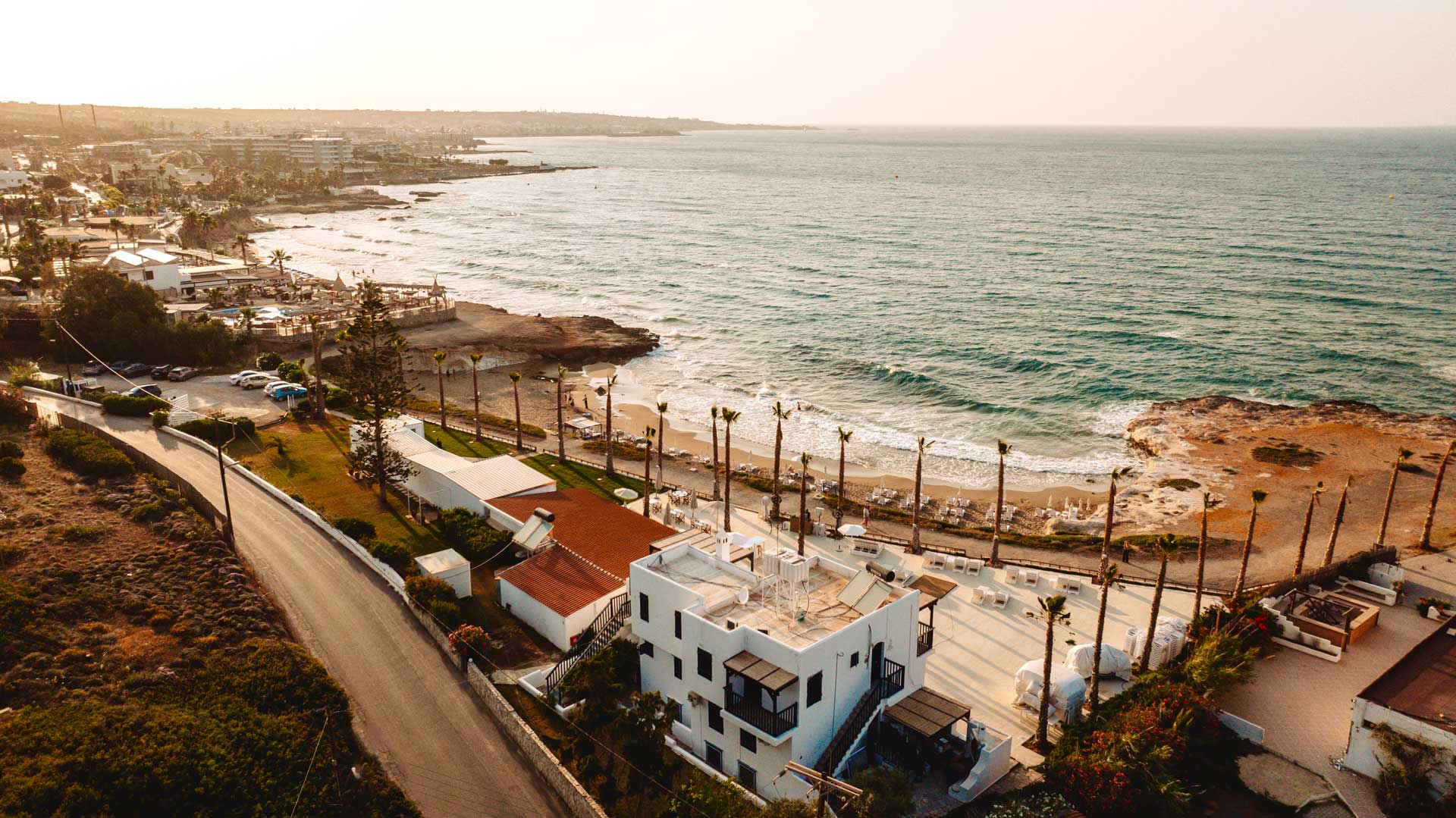
Rethymno is one of the most underrated day trips from Heraklion and one of the easiest.
Around an hour west along the north coast highway, the old town is Venetian and Ottoman in character, with a well-preserved fortress, a lighthouse harbour, narrow lanes, and a long sandy beach running directly alongside the town.
It works particularly well as an evening trip. Drive over in the late afternoon, walk the old town as the light changes, eat dinner by the water, and drive back. Rethymno has a different pace to Heraklion and the contrast is worth experiencing.
Elafonissi is regularly listed among the best beaches in Greece, known for its shallow turquoise water and, under the right conditions, a faint pink tint to the sand from crushed shells.
It is worth being honest about the distance. From Heraklion, you are looking at roughly 2 to 2.5 hours each way along winding mountain roads. It is doable as a day trip but it is a committed one. Leave early, arrive before the beach fills, and accept that the drive back will take longer than expected.
If you are going, go for the full experience. Do not rush it. Read our guide to Crete's most popular beaches for more insight.
East of Heraklion, near the village of Elounda, Spinalonga is a small island with a Venetian fortress that served as one of Europe's last active leper colonies until 1957.
The combination of history, isolation, and the boat crossing makes it a genuinely memorable trip. It takes about an hour to reach from Heraklion, with short ferry crossings running regularly from Elounda and Plaka.
South of Heraklion, around 75 kilometres, Matala is a beach village built around a cove backed by sandstone cliffs containing ancient cave dwellings. The caves were used by the Romans and later, in the 1960s, became home to a community of international travellers including, reputedly, Joni Mitchell and Cat Stevens.
A different kind of day trip: history, beach, and a strange and specific atmosphere that does not resemble anywhere else on the island.

Above: Morning colours at Matala, Greece. Photo by Tobias Reich on Unsplash
A hire car is the most practical option for day trips and for reaching beaches outside the city. Roads on the main north coast highway are good. Inland and mountain roads are narrower and require more attention, particularly on the drive to Elafonissi.
Driving in Crete is on the right. Speed limits are standard EU: 50km/h in urban areas, 90km/h on rural roads, 110km/h on the north coast highway. Cretans drive with confidence; keep your distance and stay attentive.
Parking in Heraklion city itself can be genuinely difficult. If your base is outside the centre, consider driving to the edge of the city and taking a taxi or walking in.
Scooters are widely available and popular. They are practical for short distances and coastal roads.
Before hiring one, check your travel insurance carefully. Many standard travel policies do not cover motorised two-wheelers above a certain engine size, and local hire insurance is often limited. If you are not an experienced rider, the roads in and around the city are not the place to learnn.
For the city itself and for airport transfers, taxis are easy and inexpensive by northern European standards. Bolt operates in Heraklion and is generally the most straightforward option.
For longer transfers, pre-booking a private transfer is worth the small additional cost, particularly on arrival when navigating an unfamiliar airport after a flight.
The old town, the harbour, the fortress, the market: all of it is walkable. Heraklion's central area is compact enough that a good pair of shoes covers most of what you need.
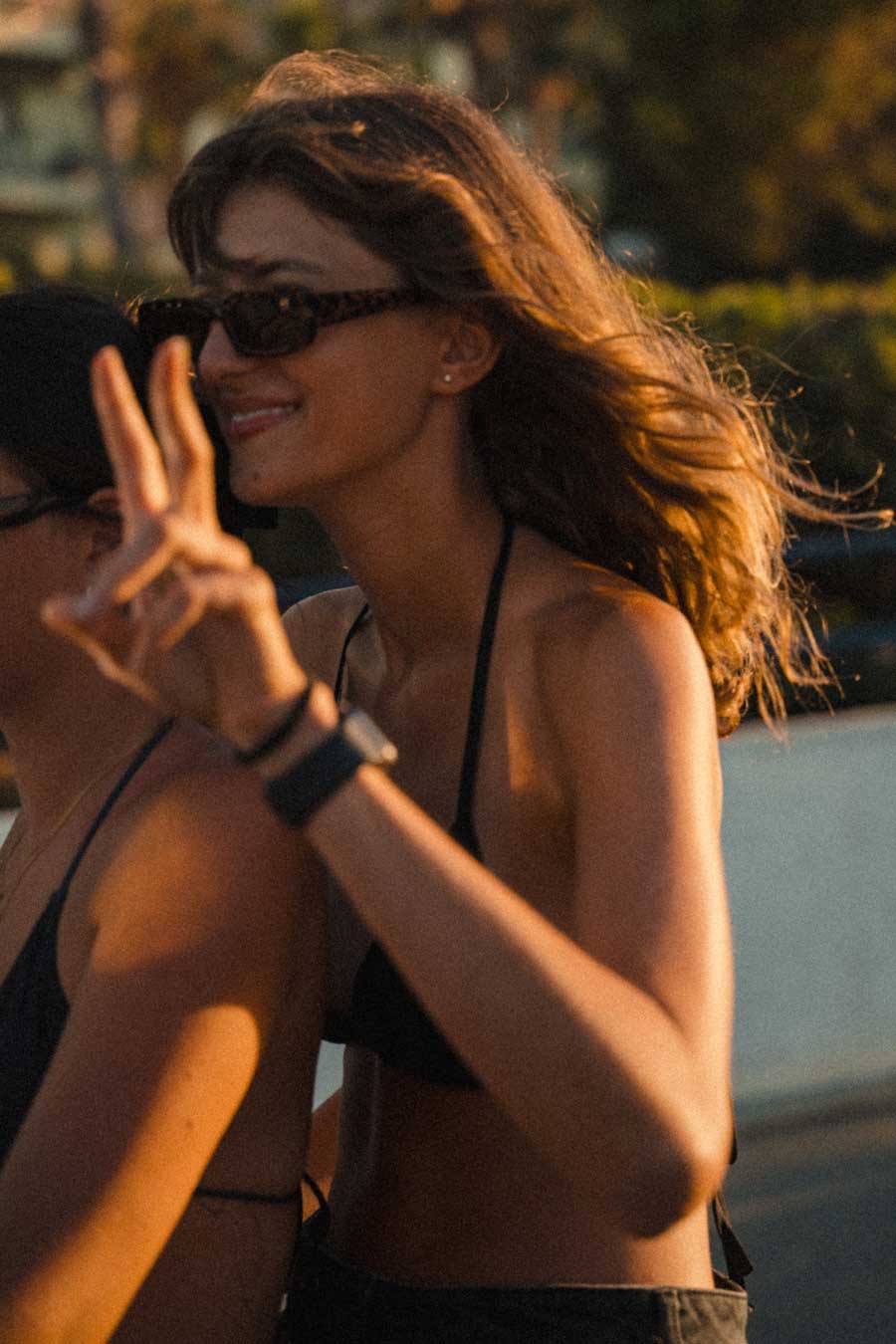
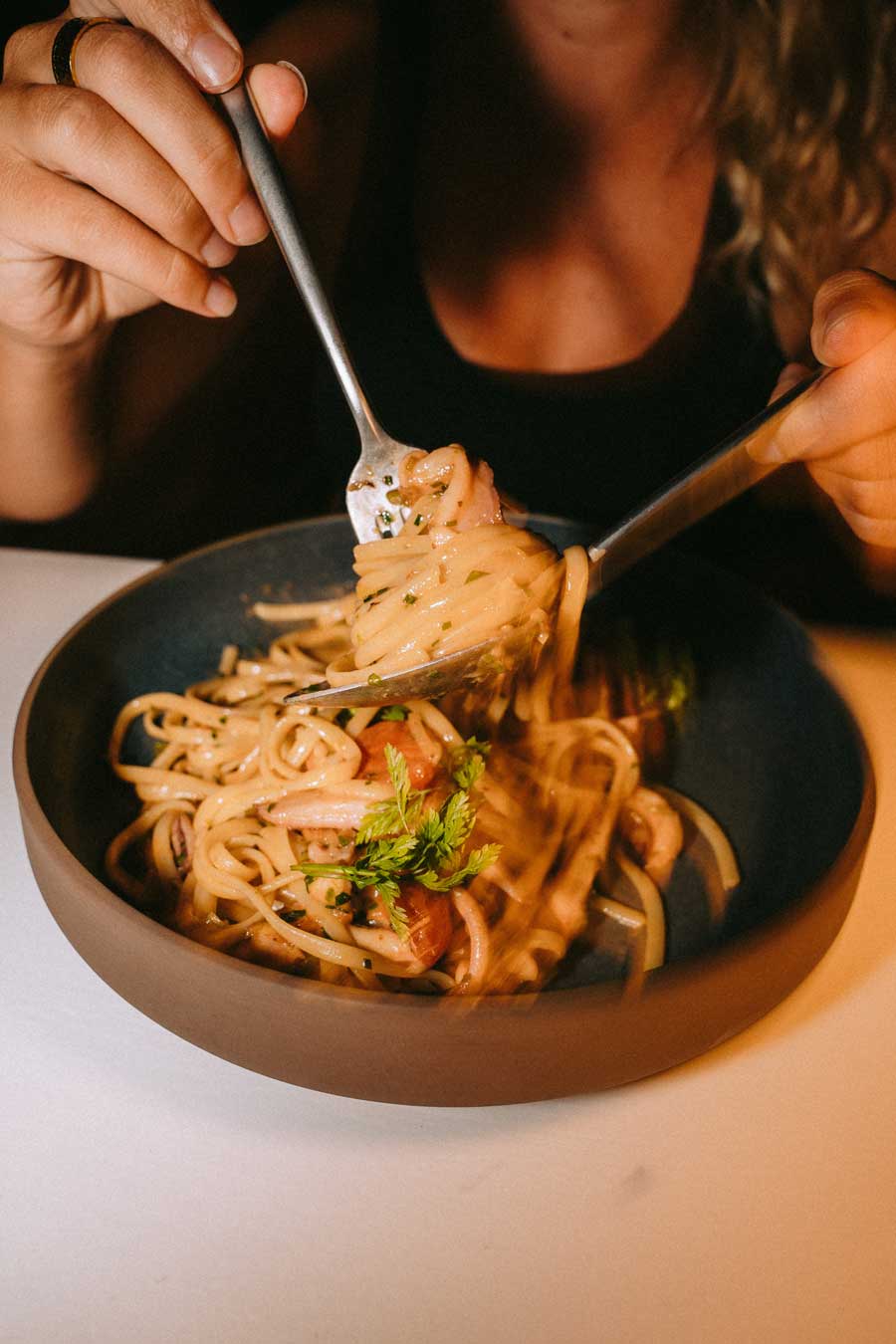
Cretan food is distinct from mainland Greek cooking and worth approaching with curiosity.
Dakos is the classic starting point: a barley rusk soaked just enough in olive oil and tomato juice, topped with crumbled mizithra cheese and olives. Simple, specific to Crete, and very good.
Fresh seafood along the harbour. Octopus, sea bream, red mullet. Order simply. Do not overthink it.
Slow-cooked lamb and goat, often cooked in a wood oven for hours. Inland villages do this better than tourist restaurants, but good versions exist in the city.
Horta, wild greens cooked in olive oil with lemon. Present on almost every table. Excellent.
Cretan olive oil is some of the finest produced anywhere in the world. You will taste the difference.
Tsikoudia, also called raki, is the local spirit: clear, strong, and served free at the end of almost every meal in a traditional setting. It is a gesture of hospitality. Accept it.
For lunch or dinner close to the beach, DIO's taverna sits directly above the shoreline. Fresh food, shade, and the sea visible from the table.
The central market on 1866 Street is the best place to start.
Cretan olive oil and thyme honey are the two most worthwhile things to take home. Both are produced on the island, both are of exceptional quality, and neither is easy to find in the same form elsewhere.
Leather goods, particularly sandals and boots, have a long craft tradition in Crete. Handmade versions are available in the old town.
Cretan knives are a distinct local craft: handmade, with carved handles, and taken seriously by the people who make them.
Ceramics and woven textiles are widely available. Quality varies. Take your time.
Avoid buying anything under pressure. The best shops do not need to work for your attention.
Greece has modernised quickly and card payment is widely accepted in hotels, restaurants and larger shops. Smaller tavernas, market stalls, village petrol stations and rural areas still prefer cash.
The practical answer is to carry both. Withdraw cash at an airport or city ATM on arrival. Do not rely exclusively on card if you are planning day trips to smaller villages or markets.
Yes. Heraklion is a safe city by any European standard. Petty theft exists, as it does everywhere, but violent crime is rare and the city is generally relaxed and hospitable.
The usual awareness applies: watch your belongings in crowded areas, do not leave valuables visible in a hire car. Beyond that, move freely.
English is spoken widely in tourist areas and most restaurants. Outside the city, coverage is thinner. A few words of Greek, kalimera (good morning), efharisto (thank you), parakalo (please), go a long way and are genuinely appreciated.
Tap water in Heraklion is technically drinkable but most locals and visitors drink bottled. Buy a large bottle from a supermarket rather than relying on small plastic bottles throughout the day.
Tipping is not mandatory but is appreciated. Rounding up the bill or leaving a few euros on the table is the norm. Exceptional service warrants more. Do not feel obligated to follow northern European tipping percentages.
May and June: Warm, uncrowded, the sea is already swimmable. July and August: Peak season. Full energy, full beaches, higher prices. September: Warm sea, softer light, noticeably quieter than August. October: The quietest month that is still reliably warm.
For beach, sunset and atmosphere without peak season crowds, late May, June and September are the strongest months.
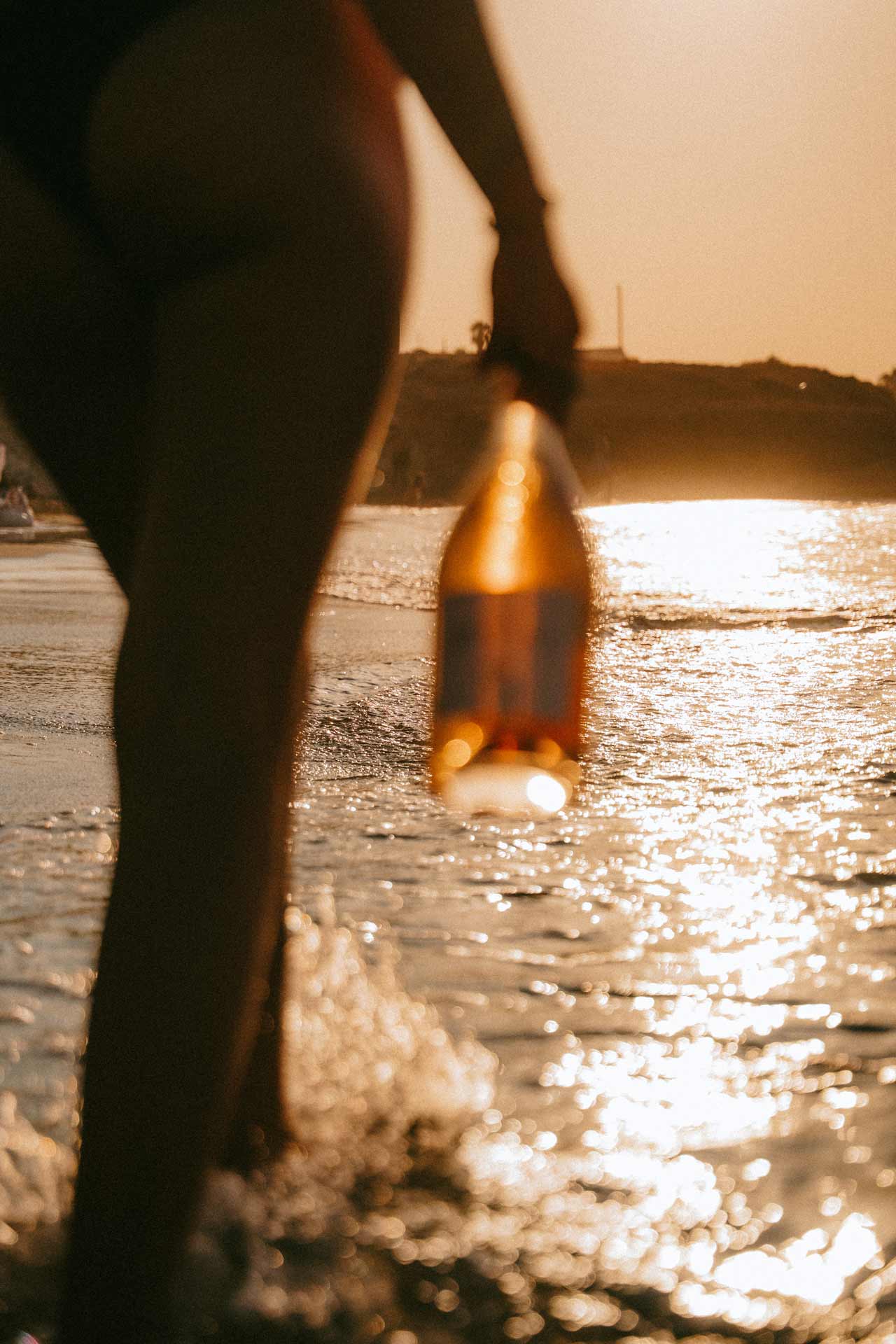
Heraklion evenings move at their own pace.
The old town comes alive after dark in a local rather than tourist way. Lions Square, the harbour, the lanes behind the market: all worth walking at night.
On the coast, sunset is a different kind of event.
At DIO, the afternoon transitions into evening without a hard edge. DJs begin quietly. Lighting shifts. The temperature drops just enough to signal what comes next. You look up and realise time has moved faster than expected.
Sunset here is not a performance. It is a transition point. We celebrate that moment each day with our free SUNSETS events.
One of the most overlooked things to do in Heraklion is to stay at the table.
Order fewer dishes and share them. Fresh fish. Local vegetables. Olive oil poured generously. Wine kept cold. Do not rush the meal toward something else.
The second swim matters. First swim is practical. Second swim, everything relaxes. Third swim, you stop narrating the trip entirely.
Crete rewards stillness. Heraklion, used properly, is a very good place to practice it.
Hersonissos is approximately 26 km east of Heraklion city centre, around a 30-minute drive along the E75 national road. Taxis between the two run regularly and cost in the region of €35 to €45 depending on traffic and time of day.
Knossos Palace is approximately 25 km west of Hersonissos, a 30 to 35-minute drive. It's one of the most significant archaeological sites in Europe and well worth a visit before or after a day at DIO. Taxis between Hersonissos and Knossos typically cost €30 to €40 each way.
DIO sits in Hersonissos, one of the north coast's most established resort towns. The immediate neighbouring areas are:
Stalida (Stalis) -- around 5 km east, a quieter, family-friendly beach resort with a long sandy shore.
Malia -- around 8 km east, a lively coastal town with its own beaches, nightlife, and the impressive Minoan Palace of Malia archaeological site.
Heraklion -- the island capital, approximately 26 km to the west, home to Knossos Palace, the Heraklion Archaeological Museum, the Venetian harbour, and the main ferry port.
There are three main options from Heraklion Airport to Hersonissos:
Taxi -- The fastest and most convenient option. Taxis wait outside the arrivals hall and the fare to Hersonissos is approximately €30 to €40 for the cab (not per person). The journey takes around 25 minutes in normal traffic. Agree the fare with the driver before setting off; a fare board in the arrivals hall lists agreed rates to key destinations.
Pre-booked transfer -- Several local companies offer private airport transfers. Worth booking in advance if you're arriving late or travelling with a group and luggage.
Bus -- A cheaper option, though it involves getting to the central Heraklion bus station first (a short taxi ride or 2 km walk from the airport), then boarding a KTEL regional bus east towards Hersonissos. The journey takes 30 to 45 minutes and tickets cost a few euros. Buses run every 30 to 60 minutes during the day.
The closest airport to DIO is Heraklion International Airport "Nikos Kazantzakis" (HER), approximately 22 km west of Hersonissos. It's a straightforward drive along the E75 national road and takes around 25 minutes without heavy traffic. This is the airport to use for the vast majority of visitors arriving in summer, as it receives direct flights from across Europe.
Chania International Airport (CHQ) is the island's other main airport, roughly 130 km to the west. It's a viable option if flights are significantly cheaper or more convenient from your departure city, but factor in the additional 90-minute drive along the north coast road.
Yes. Search for DIO Hersonissos on Google Maps for the most accurate pin. The venue is located directly on the beachfront in Hersonissos, on the northern coast. If you're using a navigation app, searching "DIO beach club Hersonissos" should bring up the correct location. Our street address is Themistokleous 9, Limenas Chersonisou 700 14, Greece.
Yes. Taxis are widely available in Hersonissos and across the surrounding area. You can hail one on the street, ask your accommodation to arrange one, or use a local taxi app. For event nights, we recommend booking your return taxi in advance rather than relying on finding one outside the venue at the end of the night, particularly during busy periods in July and August.
Yes. KTEL buses run regularly along the north coast road between Heraklion and the eastern resorts, stopping in Hersonissos. If you're staying locally in Hersonissos, Stalida, or Malia, the venue is easy to reach without a car. Check current KTEL schedules for up-to-date timetables, as evening services can be less frequent.
Yes. Heraklion Port is the main ferry hub for Crete and is well connected to Piraeus (Athens), Santorini, and other Aegean islands. Overnight ferries from Piraeus to Heraklion run daily throughout the summer and take around 8 to 9 hours. High-speed ferries from Santorini to Heraklion take approximately 1.5 to 2 hours. From Heraklion Port, Hersonissos is a straightforward 25-minute taxi or transfer ride east along the coast road.
Ferry bookings can be made through operators including Seajets, Blue Star Ferries, and Minoan Lines, or via aggregator sites such as Ferryhopper.
DIO sits on one of the only pure sand beaches in Hersonissos. Most of the coastline in the area is rocky or pebbly, so the soft sand at DIO is genuinely rare and one of the things that sets it apart. The water is crystal clear and the beach is kept in excellent condition throughout the season.
Yes. The DIO beach is open to day visitors as well as suite guests and event attendees. You can book a sunbed and enjoy the beach, kiosk, and bar without attending an event or staying in the suites. The beach is part of the core DIO experience.
Greece is part of the Eurozone, so the currency is the euro (€). All major cards are accepted at hotels, supermarkets, larger restaurants, petrol stations, and most tourist-facing businesses in Hersonissos. Contactless payments are standard at most larger establishments, and Apple Pay and Google Pay work wherever contactless terminals are available.
Cash is still worth carrying for smaller tavernas, local markets, taxis, and any smaller or more traditional establishments that may not accept cards. ATMs are widely available in Hersonissos and across the north coast.
English is very widely spoken in Hersonissos and across the tourist areas of north Crete. Staff at hotels, restaurants, beach clubs, shops, and most tourist-facing businesses will speak English comfortably. Greek is of course the local language, and a few words go a long way.
A handful of useful phrases: kalimera (good morning), kalispera (good evening), efharisto (thank you), parakalo (please or you're welcome), and yamas (cheers). Locals genuinely appreciate the effort, however small.
A few things worth knowing before you arrive:
The afternoon siesta is real. Roughly between 2pm and 5:30pm, many local businesses, small shops, and offices close or go quiet. The heat is at its peak and life slows down accordingly. Plan around it rather than against it.
Greet people. A kalimera (good morning) or kalispera (good evening) when entering a shop or speaking to someone new is standard courtesy and always appreciated.
Dress respectfully at religious sites. When visiting churches or monasteries, shoulders and knees should be covered for both men and women. A light scarf or shawl in your bag is practical and respectful. Beachwear is for the beach; walking through towns or villages in swimwear is generally frowned upon.
Tipping. Not mandatory, but appreciated. Rounding up the bill or leaving around 5 to 10 percent in tavernas is customary for good service. For taxis, rounding up the fare is sufficient.
Pace. Greeks live at a slower, more generous pace than many northern Europeans are used to. Meals are unhurried, service is warm but not rushed, and the philosophy of siga siga (slowly, slowly) runs through everything. Lean into it.
Opening hours in Crete follow a rhythm shaped by the Mediterranean climate. During summer, most supermarkets open from around 8am and close at 9pm Monday to Friday, with slightly shorter hours on Saturday (closing around 6pm). Some supermarkets in resort areas open on Sundays during peak season.
General shops typically open from 9am to 2pm, with some also opening again in the evening from around 5:30pm to 9pm on Tuesday, Thursday, and Friday. Shops are generally closed on Sunday.
Banks open Monday to Thursday from 8am to 2:30pm and Friday from 8am to 1:30pm. They are closed on weekends and public holidays.
Pharmacies keep standard shop hours. A duty pharmacy roster operates outside of those hours; the open pharmacy for each period is listed in the window of every closed pharmacy. The list is in Greek, so asking your accommodation for help is the easiest option.
Petrol stations in and around Hersonissos and on main roads typically open from around 6am to 10pm. Some operate on Sundays in summer; rural and more remote stations may have limited hours.
Crete has a classic Mediterranean climate. Summers (June through August) are hot, dry, and reliably sunny, with temperatures in Hersonissos typically ranging from 27 to 35 degrees Celsius. The sea is warm throughout the summer season and well into September. Humidity is generally low on the north coast, kept comfortable by the Meltemi wind that blows across the Aegean in July and August. Light evening clothing is all you'll need for most nights, though a layer is worth having for late evenings or air-conditioned venues.
DIO is a boutique beach club nestled on the shores of Hersonissos, where the Aegean meets world-class music. The beach sits at the centre of the DIO experience: sunbeds, handcrafted cocktails, food delivered to your spot, and carefully curated sounds from the DJ programme as the afternoon unfolds. It is a place where luxury, nature, and music converge into something designed to be savoured slowly.
Yes. DIO has four luxury boutique suites, each situated directly above the Mediterranean on the beachfront in Hersonissos. The suites are designed for guests who want to live inside the DIO experience fully, from morning swims and balcony lunches through to an unobstructed view of the evening's music events below.